
Tree Service in Belle Isle, FL
Call us
(407) 853-8735
Service area
Belle Isle and the towns around it
Scheduled visits
Booked ahead, not promised at short notice
What Belle Isle is built on
Tree Service in Belle Isle, FL
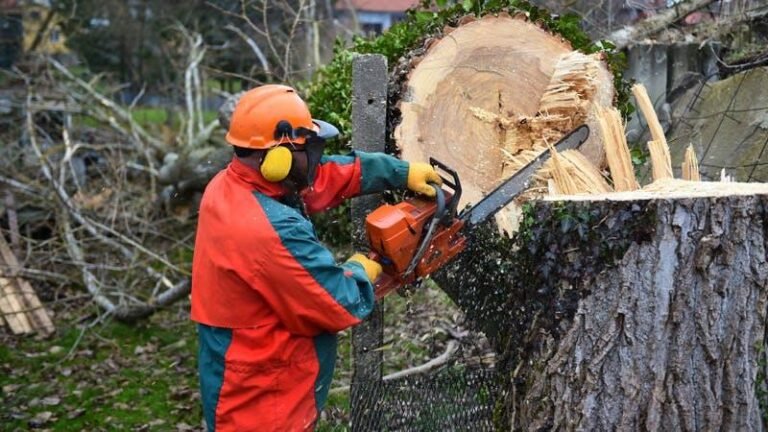
Belle Isle is a town of 7,444.0 people on 2.41 square miles, and most of its tree problems are clearance problems: a canopy over a roof, a limb on a service drop, a stump in the way of a fence. The ground at the Census place point sits at about 95 ft, the 12th-lowest of the twenty places served here, and the trees have had the same forty years the houses have had.
What Belle Isle is built on: the ground and the housing here
The ground and the elevation
The ground under Belle Isle sits at about 95 ft at the Census place point, the 12th-lowest of the twenty places served here , across 2.41 square miles of Orange County. The upland soil is the Orlando series — very deep, well-drained, rapidly permeable fine sand, strongly acid through the profile. Elevation matters here for a simple reason: water moves downhill, and a lot that sits a little lower than its neighbours holds the wet longer after a storm. That is the difference between a root plate that dries out between rains and one that stays loaded for a season, and it is why the base of a tree on low ground is read before the crown. It also decides where a machine can stand in a wet week.
When the houses in Belle Isle went in
The median year built in Belle Isle is 1977.0, and roughly 56.6 per cent of the housing was standing before 1980 — the 19 oldest housing stock of the twenty places here. That matters because a tree is a record of when the ground around it was last disturbed, and the subdivision that built the houses is also the thing that chose which trees stayed. Land cleared for a subdivision in the 1970s left the trees that were kept and took out the rest, and those survivors are now mature enough to be at the size where a defect matters, while the ones that were replanted are still catching up. On the newer streets the trees are younger but the lots are smaller, so the same species is closer to the structure.
The trees that are actually here
The usual mix around Belle Isle is live oak, laurel oak, water oak, southern magnolia and sabal palm, with queen palms and crape myrtle on the planted side. Each behaves differently when it comes down: a live oak is wind-resistant but wide, a laurel oak grows fast and is the one most often found hollow at the base, and a sabal palm is a different job from a broadleaf tree entirely. Palms are the ones most often mistreated, because a hard trim removes the fronds the palm feeds with and leaves it thinner for years rather than safer for the next storm. The species decides the rigging, the size of the pieces and how much of the work happens from the ground, which is why a walk that starts with the species saves an hour of guessing on the morning of the job.
Who decides about a tree in Belle Isle
Inside the City of Orlando a tree of ten inches or more in diameter at breast height is a protected tree and removal needs a Tree Removal Permit first; in unincorporated Orange County the county’s tree removal permit applies, with a tree survey and identification of heritage and specimen trees under Chapter 15. That is the first thing checked for an address in Belle Isle, because a protected tree removed without the permit is a code problem rather than a tidy-up. The second thing is the root zone: the code sets a minimum undisturbed area around a protected tree, and that radius decides where a machine may sit and where material may be stacked. Both are settled before a date is offered rather than on the morning of the work, which is why the walk comes before the schedule.
Next step
Call (407) 853-8735 with the address, what the tree is doing and what has to stay open while the work happens. Tree Service Company Orlando will walk the property in Belle Isle, read the base and the access, check whether the city or the county requires a permit for that tree at that size, and put the scope in writing before a date is set.
Tree work in Belle Isle
Tree services in Belle Isle
The work on a Belle Isle property is rarely one job. A removal usually arrives with a stump, a debris pile and a neighbour’s tree that is also past its space, and doing them in one visit is how a property stops producing the same problem every year.
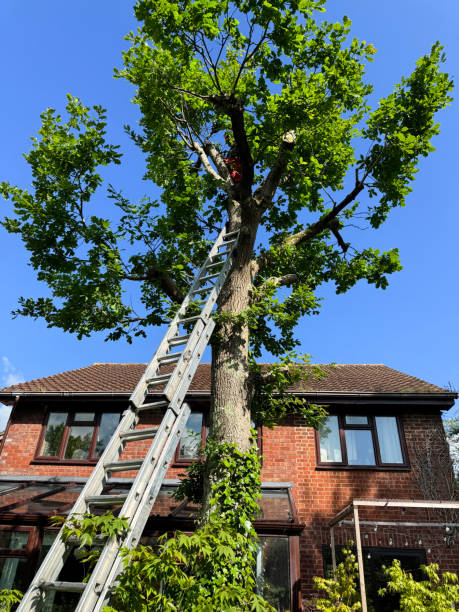
Tree removal covers the tree that has failed, is failing, or cannot stay where it stands — the one with a hollow at the base, a split union, or a lean that has changed. Tree removal in Orlando sets out how the base, the access and the permit decide the method.
Trimming and pruning are the two that get confused. Tree trimming is clearance: growth taken back off a roof, a drive or a service drop. Tree pruning is structural work on a tree that is staying — deadwood out, a long limb reduced to a side branch, a weak union managed. A tree in Belle Isle that is only ever trimmed never gets the structural work it needs.
A stump is ground below grade and the hole brought back to level. Debris removal is the brush, trunk wood and grindings that a removal produces, hauled in planned loads rather than stacked at the curb. Land clearing is the lot-scale version, worked to a survey.
Where a tree has already failed or is leaning on something, hazardous tree removal is the assessment-first version of the same trade, and where a property is a business rather than a house, commercial tree services work to the tenant schedule instead of the household one.
What ties them together on a Belle Isle lot is the order. The base of the tree is read before the crown, the access is chosen before the equipment, and the permit position is settled before a date is offered. A job that starts with the saw is a job that finds those three things out afterwards, usually with the tree already on the ground and the material already in the way.
Access is the part that decides the shape of a job in Belle Isle more than most owners expect. A gate narrower than a chipper, a drive that cannot take a loaded truck, a lawn that is the only route to the back garden and a pool screen that has to stay intact all push the work toward smaller equipment and more of it, and that is settled before the date rather than on the morning. It is also why the same job can look different on two lots a street apart: the trees are the same size and the way in is not.
A job that starts with the walk finds those three things out while there is still a choice about which tree comes out first, where a truck can stand and whether a stump can be ground on the same visit as the removal that made it. That order is also why a small job in Belle Isle can be finished in a morning and a large one takes a planned campaign: the work is the same work, and what changes is how much of it can happen without moving something that cannot be moved back.
How a visit runs
- Walk the property and note what is at risk
- Check the base, the crown and the access
- Confirm what the city or county requires
- Put the scope in writing before the work
- Clear the debris and rake at the end
What we will not do
- We will not promise a time we cannot keep
- We will not claim a credential we cannot show
- We will not give a figure for a tree nobody has seen
- We will not stack debris at the curb and call it cleared
- We will not cut a tree that can be pruned and kept
Why property owners in Belle Isle choose a planned job
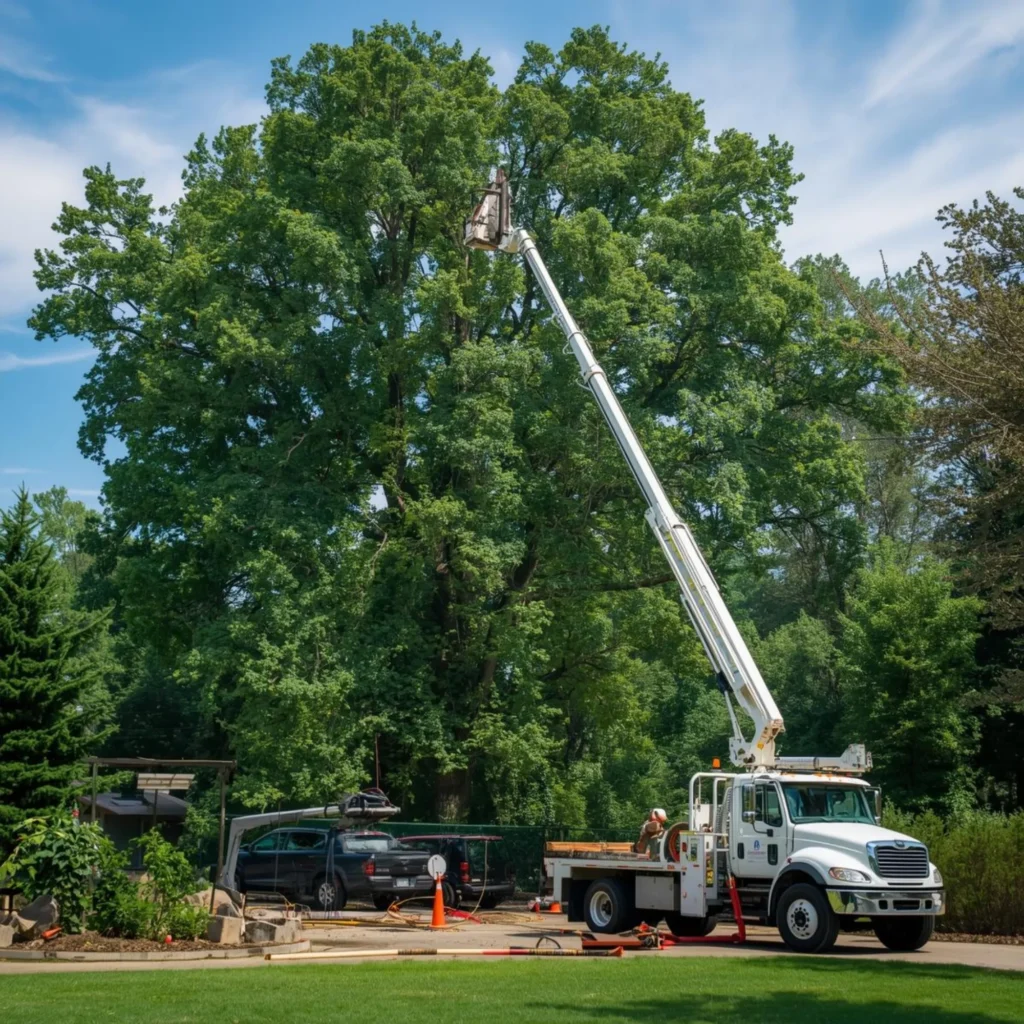
The work in Belle Isle is planned around three things that a crew cannot fix on the morning: the base of the tree, the access the property actually has, and what the city or county requires for that address. Those are settled in a walk before a date is offered, which is why the scope can be written down rather than described.
That is also why the answer is sometimes that a tree should stay. A tree with a sound base and a long limb is a pruning job, and saying so is the simpler answer for the owner than removing something that did not need to come out. The same walk records what was left standing and why, which is the half of the decision that gets forgotten until somebody asks. Tree Service Company Orlando works from 1018 E Concord St in the 32803 ZIP and covers Belle Isle and the towns around it.

Why timing matters in Belle Isle
The wet season here has an average onset in the last week of May, per the National Weather Service, and from then until roughly October the ground is regularly saturated. The nearest official wind record for this part of Orange County is Orlando Executive Airport, which logged sustained winds of 43 knots gusting to 63, with 6.87 inches of rain, when Hurricane Milton crossed the peninsula in October 2024.
Saturated sand is where a root plate that was already marginal stops holding, which is why the trees that come down are so often the ones that had started. It is also why the work itself is easier in a dry week: the machine carries better, the access holds, and the lawn recovers instead of rutting.
There is a second reason the calendar matters, and it is about the work rather than the tree. A removal in a dry week can use the ground, the access and the long daylight, and it can be scheduled without watching a forecast. The same removal in a saturated week works around mats, a shorter reach and a drop zone that has to assume a machine will sink where it stands. On a Belle Isle lot with a narrow gate or a soft lawn, that difference is the whole job.
Hurricane season runs from 1 June to 30 November on the same calendar. A tree with a hollow base or a split union in Belle Isle does not need to wait for either date to be dealt with, and the assessment is worth doing before the season rather than after it, when the same tree is heavier, softer and holding more water.
Tree work around Belle Isle
Frequently
Asked
Questions
Do I need a permit to remove a tree in Belle Isle?
Inside the City of Orlando a tree of ten inches or more in diameter at breast height is a protected tree and removal needs a Tree Removal Permit first; in unincorporated Orange County the county’s tree removal permit applies, with a tree survey and identification of heritage and specimen trees under Chapter 15. The position for a specific address is checked before a date is booked, and a protected tree removed without it is a code problem rather than a tidy-up.
How old are the trees on a typical Belle Isle lot?
The median house in Belle Isle was built in 1977.0 and about 56.6 per cent of the housing predates 1980. A tree planted when those houses went in has had forty years or more to grow into the space it was given, so the clearance question here is usually about mature trees rather than new planting.
What is the ground like in Belle Isle?
The ground at the Census place point sits at about 95 ft across 2.41 square miles. The upland soil is the Orlando series — very deep, well-drained, rapidly permeable fine sand, strongly acid through the profile. That is good for roots and awkward for a machine, because it carries a loaded truck in a dry week and badly after rain.
When should tree work be done in Belle Isle?
Late winter into early spring for structural pruning, so the wound closes through the wet season, and for palms whenever dead material needs to come off — with the cut kept minimal in any season. Deadwood can be removed at any time, and a tree with a defect does not need to wait for a convenient month.
Which trees are most common around Belle Isle?
The usual mix is live oak, laurel oak, water oak, southern magnolia and sabal palm. Each behaves differently when it comes down, which is why the walk starts with what the tree is rather than with its height.
Do you grind the stump as well?
Yes. The stump is ground below grade, six to twelve inches depending on what will sit over it, the hole is backfilled and levelled, and the grindings are taken away or spread as agreed. Underground services are located through 811 before any cut into the ground.