
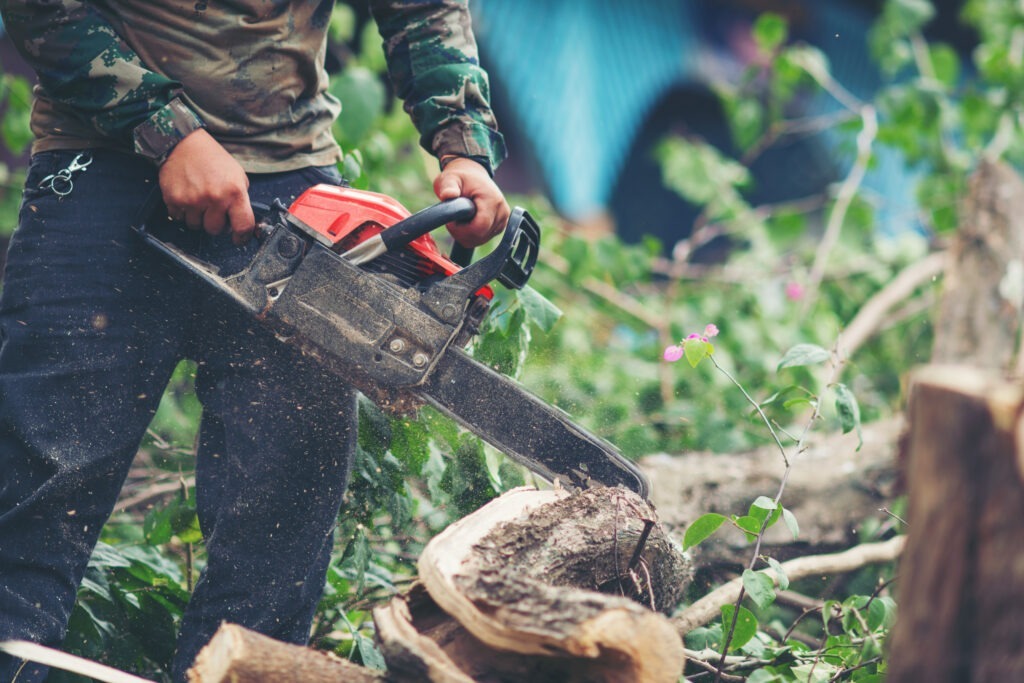
The clearest signs a tree needs removal in Orlando FL are a sudden new lean after a storm, large cracks or splits in the trunk, fungi or mushrooms growing at the base, significant sections of dead canopy, exposed or heaving roots, and any tree growing directly over a structure or utility line. In Florida’s hurricane-prone climate, these warning signs are not “watch and wait” situations — a compromised tree in Orlando can become a projectile in a tropical storm within hours.
In our work across Orlando, Winter Park, Sanford, and the surrounding Central Florida area, we’ve seen the same warning signs appear again and again before a tree fails. Here are the nine that matter most — and what each one means for your property.
The 9 Signs a Tree Needs Removal in Orlando FL
Sign 1: A Sudden or Significant Lean
A sudden, pronounced lean, especially after a storm, indicates that the root system is compromised and the tree is at imminent risk of falling. A tree that has always had a slight lean is less concerning than a tree that has recently developed a new lean — that change signals active root or structural failure. First Street
Why it’s urgent in Orlando: Florida’s saturated soils during heavy rain events reduce root anchoring dramatically. A tree that holds in dry conditions can uproot in minutes when the soil is waterlogged and hurricane-force winds are pushing against it. Any tree leaning toward a structure, vehicle, or utility line should be assessed by an ISA-certified arborist immediately — not at the next scheduled appointment.
What to do: Do not enter the area under the canopy. Call a licensed tree company for a same-day assessment.
Sign 2: Large Cracks or Splits in the Trunk
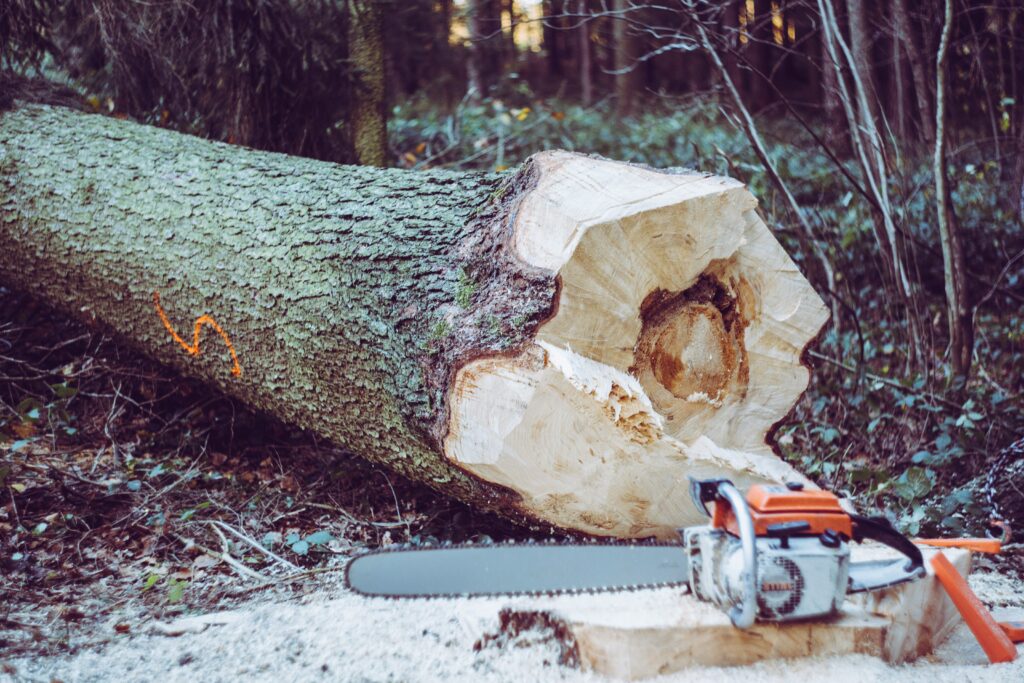
Any significant crack, split, or gash in the trunk is a sign of severe structural instability. A tree with a compromised trunk can no longer support its own weight, especially when a storm adds the pressure of wind and rain. First Street
A single clean crack is concerning. Multiple cracks, or a crack that runs vertically through a major crotch in the tree, is a near-certain failure point under load. This is one of the most direct signs that a tree needs to be cut down before storm season in Central Florida.
Sign 3: Fungal Growth at the Base or on the Trunk
Fungi growing near the base of a tree is a major warning sign of internal rot. Rot weakens the tree from the inside out — making collapse much more likely. Mushrooms and conks growing from the root flare, the base, or the trunk itself indicate that decay is already well advanced internally. RoofClaim
The deception: A tree with significant internal rot can look completely healthy from the outside. The canopy stays green while the structural core deteriorates. By the time the rot is visible as external fungal growth, the tree’s load-bearing capacity is already significantly reduced.
In Orlando’s humid subtropical climate, fungal infections spread faster than in dry climates. A tree showing basal fungal growth should be assessed by an arborist before the next storm system, not the next season.
Sign 4: Large Dead Branches or a Dead Crown
Large dead branches hanging over structures, walkways, or power lines are a serious threat and can fall on people, vehicles, or structures without warning. They are aptly named “widowmakers” in the tree care industry. RoofClaim
A single dead branch over an open lawn may warrant pruning, not removal. But if more than 25–30% of the canopy is dead — or if dead branches are positioned directly over your roof, pool, fence, or driveway — removal is the responsible call. Dead wood loses structural integrity and can drop with no warning, in calm conditions or storm conditions alike.
Sign 5: How Do You Know If a Tree Is Dead? Check the Scratch Test
How do you know if a tree is dead versus just dormant or stressed? The simplest field test: scratch a small section of bark on a living branch. If the layer beneath is green and moist, the branch is alive. If it’s brown, dry, or brittle, it’s dead.
Sparse leaf growth or bare patches in the canopy during growing season, large dead branches hanging in the canopy, and a hollow trunk are among the most reliable signs of a dying or hazardous tree. In Orlando, a tree that still hasn’t leafed out by April or May — well into Florida’s growing season — is almost certainly dead or severely distressed.
Additional signs of a dead tree: No leaf growth on branches that have visible buds, brittle branches that snap cleanly rather than bending, and bark that peels away in large sections rather than the normal seasonal shedding.
Sign 6: Exposed, Heaving, or Damaged Roots
Root problems are often invisible until they’re catastrophic. But several surface signs indicate compromised root systems:
- Heaving soil around the root zone — the ground is visibly lifting on one side as roots lose anchoring
- Exposed surface roots that show signs of decay, soft spots, or fungal growth
- Construction damage — root systems cut by trenching, soil compaction from vehicles, or grade changes within the drip line
- Erosion — roots exposed by water erosion, especially along drainage channels common in Orlando-area properties
When roots are compromised, the tree may fall — even if it looks healthy above ground. Root system failure is responsible for many of the whole-tree uprooting events that follow Orlando hurricanes, particularly in water oaks and laurel oaks where the shallow root system can’t withstand saturated soil under wind load. Mesocore
Sign 7: A Hollow or Significantly Decayed Trunk
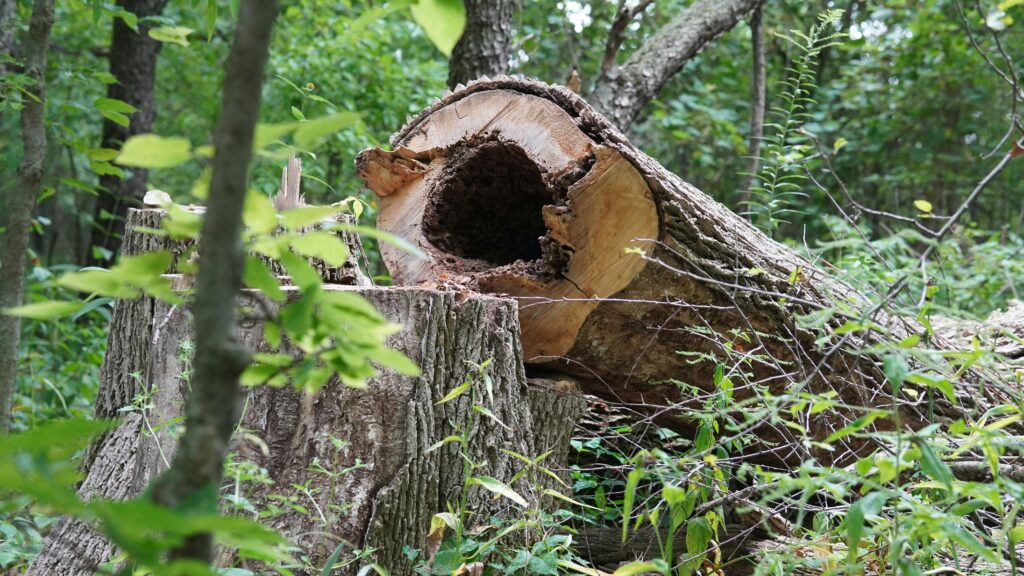
A significant portion of the trunk appearing hollow due to internal decay is one of the most serious signs requiring immediate removal consideration. A tree’s trunk carries the entire structural load of the canopy above. Once a significant percentage of that cross-section is hollow, the remaining wood must carry disproportionate load — and eventually fails. Sunfloroofing
Note: A small hollow cavity doesn’t automatically mean removal. An ISA-certified arborist can assess what percentage of the trunk cross-section remains structurally sound. A general rule of thumb: if more than one-third of the trunk’s diameter is hollow, the tree is considered a significant hazard.
Sign 8: Disease Signs — Discoloration, Bark Loss, and Oozing
Diseased trees often show signs like discolored leaves, premature leaf drop, or oozing sap. These symptoms suggest the tree’s structural integrity is compromised, making it a potential danger to your property.
Common Orlando tree diseases to recognize:
- Laurel wilt — fatal to redbay and avocado trees; causes rapid wilting and dark wood streaking
- Hypoxylon canker — attacks stressed oaks; creates dead patches of bark with gray-black powdery spore masses
- Ganoderma butt rot — causes basal rot in many Florida hardwoods; identifiable by shelf-like conks at the base
- Pine bark beetles — secondary invader of stressed pines; creates pitch tubes and sawdust at bark surface
For a diseased tree, removal timing depends on the disease, the tree’s location, and how much structural integrity remains. An ISA-certified arborist assessment is the only way to make this call accurately.
Sign 9: The Tree Is Growing Into Structures, Utilities, or Neighbors’ Property
Trees growing too close to your home, power lines, or other permanent structures — where trimming is no longer a sustainable solution — require removal.
This is the most proactive removal scenario — the tree isn’t necessarily dying, but its location creates unavoidable conflict. In Orlando’s densely developed residential neighborhoods — College Park, Thornton Park, and the established communities of Winter Park — mature trees frequently outgrow their original planting space and encroach on structures, foundations, sewer lines, and neighboring properties.
When trimming stops being enough: If the tree requires increasingly aggressive trimming every 1–2 years just to maintain clearance, and the root system is visibly affecting the foundation or hardscape, removal is the more economical long-term decision.
For our tree removal service in Orlando, we assess both the tree and its location before recommending removal — trimming solves many problems that don’t require the full removal conversation.
When Does a Tree Need Emergency Removal vs. Scheduled Removal?
Call for emergency same-day removal if:
- The tree is actively leaning toward a structure after a storm
- A major crack has developed or the tree has partially split
- Any part of the tree is touching or has fallen on utility lines — contact the utility company first and do NOT approach
- A large limb is hanging (“widowmaker”) over a driveway, walkway, or occupied area
Schedule a standard removal for:
- Dead trees with no immediate fall risk toward structures
- Disease-compromised trees that are still structurally stable
- Trees conflicting with foundations or utilities that are still standing securely
For emergency tree situations across Orlando and Central Florida, our emergency tree removal service provides same-day response.
Why Orlando Trees Show These Signs Faster Than Most States
Florida’s subtropical climate accelerates almost every tree decline process. Insects and fungal pathogens are active year-round — there’s no cold season that slows infestations the way northern winters do. Root systems in Orlando’s sandy, often waterlogged soils are inherently shallower and less anchored than in well-drained clay soils in other regions.
In Florida’s climate — where hurricanes, strong winds, heavy rainfall, and saturated soil are common — these risks are significantly amplified. A tree that appears healthy one day can become a major hazard during the next storm.
This is why ISA-certified arborists in Central Florida recommend annual inspections rather than the “if it looks fine, it probably is” approach common in less weather-exposed markets. For the full picture of what causes tree failure and when to call our tree service in Orlando FL, see our complete tree removal guide
Frequently Asked Questions About Tree Removal Warning Signs in Orlando
What are the main signs a tree needs removal in Orlando FL? The most reliable signs a tree needs removal in Orlando are: a sudden new lean (especially after a storm), large cracks or splits in the trunk, fungi or mushrooms growing at the base, more than 25–30% dead canopy, exposed or heaving roots indicating root failure, a hollow or severely decayed trunk, disease signs including bark loss and oozing sap, and any tree growing directly over a structure or utility line. In Florida’s storm-prone climate, any of these signs warrants an ISA-certified arborist assessment before the next major weather event.
How do you know if a tree is dead in Florida? The most reliable field check: scratch a small section of bark on a branch — if the layer beneath is green and moist, the branch is alive; if it’s brown, dry, or brittle, it’s dead. Signs of a dead tree in Florida also include no leaf growth by April or May despite being in the growing season, branches that snap brittlely rather than bending, large sections of peeling bark, and fungal growth at the base or on the trunk. A dead tree in Orlando should be removed before hurricane season if it’s within falling distance of any structure.
When should I call for emergency tree removal vs. a scheduled appointment? Call for emergency same-day removal if a tree is actively leaning toward a structure after a storm, a major crack has developed in the trunk, any part of the tree is touching utility lines, or a large dead limb is hanging over a driveway or occupied area. For dead trees with no immediate structural fall risk, diseased trees that are still standing securely, and trees conflicting with foundations, a standard scheduled removal appointment is appropriate.
What is the best time of year for tree removal in Orlando? The best time for tree removal is late fall through early spring — October through March — when contractor availability is better and crews aren’t competing for emergency storm work. That said, hazardous trees showing the warning signs above should be removed as soon as identified regardless of season. A dead or structurally compromised tree doesn’t become safer by waiting for spring. National Weather Service
See These Warning Signs on Your Orlando Tree? Get a Free Assessment.
Don’t wait until a compromised tree becomes a storm emergency. Our ISA-certified arborists provide free on-site assessments across Orlando, Winter Park, Kissimmee, Sanford, Lake Mary, and all of Orange County — and we’ll tell you honestly whether removal, trimming, or treatment is the right call.
Call 321 599 4339 — same-day response available for emergency tree situations across Central Florida.