
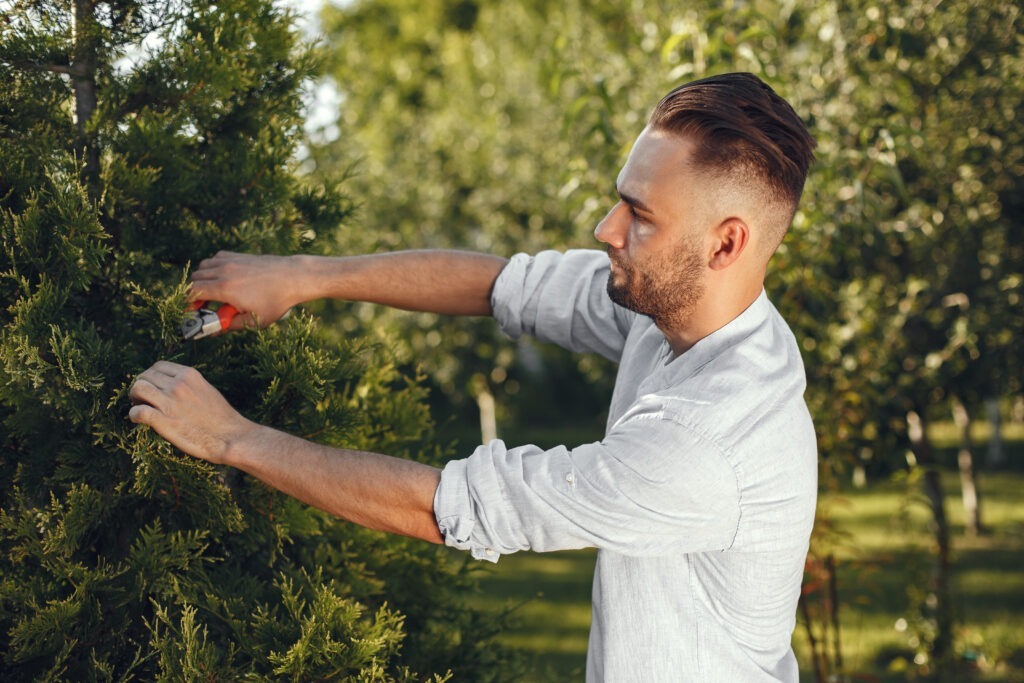
Tree pruning vs trimming are two different services — trimming focuses on appearance and size control by shaping the outer canopy, while pruning focuses on tree health and structural integrity by removing dead, diseased, or structurally weak branches from inside the tree. Most homeowners use the terms interchangeably, but choosing the wrong service — or the wrong timing — can stress or damage your tree in Orlando’s demanding subtropical climate.
In our work across Orlando, Winter Park, Kissimmee, Sanford, and the surrounding Central Florida communities, we’re asked this question on nearly every estimate call. Here’s the clear answer — and what it means for the trees on your property specifically.
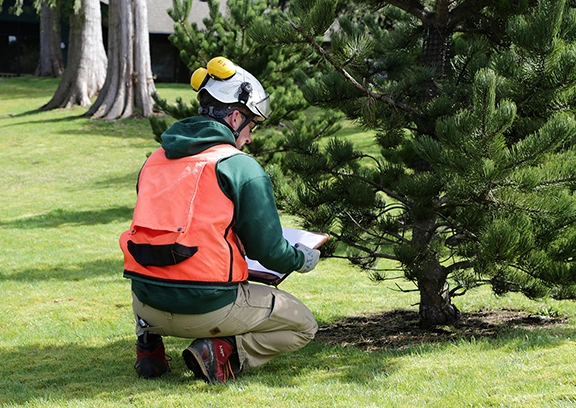
What Is Tree Trimming?
Tree trimming is primarily a landscaping practice focused on the exterior appearance and immediate utility of the plant — think of it as the grooming stage of property management. 3mg
Trimming is performed on the outer edges of the canopy — cutting back overextended branches to control size, improve shape, and maintain clearance from structures, utility lines, and neighboring properties. It’s the service most Orlando homeowners recognize: the crew comes in, shapes the tree, removes obvious overhang, and leaves the canopy looking cleaner and more contained.
When trimming is the right call:
- Branches are overhanging your roof, gutters, driveway, pool, or fence
- The tree has grown too large for its space and needs size management
- Pre-hurricane season clearance work — removing overhang before June 1
- Aesthetic shaping of ornamental trees and palms
- Maintaining HOA-required clearance standards
Tools and technique: Trimming typically uses hedge shears, loppers, and hand saws on outer branches. It’s generally a faster process than pruning and focuses on the visible silhouette of the tree rather than internal structure.
For our tree trimming service in Orlando, every job includes a visual assessment of the full canopy — and if we identify structural or health issues that require pruning rather than trimming, we’ll tell you before starting work.
What Is Tree Pruning?
While trimming addresses what we see on the surface, tree pruning is a more intensive and specialized process that focuses on the internal health and structural integrity of the tree. 3mg
Pruning involves making specific, deliberate cuts inside the canopy — removing dead wood, diseased limbs, crossing branches that rub and create wound sites, water sprouts, suckers, and structurally weak branches that could fail under load. Every cut in a pruning job is purposeful: made at the correct branch union to promote proper callusing, timed to minimize disease transmission, and sized to maintain the foliage-to-root ratio the tree needs to stay healthy.
When pruning is the right call:
- Dead or diseased branches need removal before they spread or fail
- Two major branches are crossing and creating wound sites where they rub
- The tree has developed a structurally weak co-dominant stem that needs correction
- Post-storm assessment — removing damaged wood and reducing load on compromised sections
- Young tree training — establishing a strong branch structure early prevents major problems later
- Tree has signs of pest or fungal infection that require targeted removal
Improper pruning — cutting in the wrong spot, at the wrong time, or taking too much — can open the tree up to pests and fungal disease. This is especially true in Florida’s humid climate where fresh cuts that aren’t made correctly create entry points for pathogens.
For our tree pruning service in Orlando, all pruning is performed by ISA-certified arborists following ANSI A300 pruning standards — the arboricultural industry’s definitive guidelines for proper cut placement, timing, and scope.
Tree Pruning vs Trimming: Key Differences Side by Side
| Tree Trimming | Tree Pruning | |
| Primary goal | Appearance + size control | Tree health + structural integrity |
| Where cuts are made | Outer canopy edges | Inside canopy at branch unions |
| What’s removed | Overgrown outer branches | Dead, diseased, crossing, weak branches |
| Tools used | Shears, loppers, hand saw | Pruning saw, pole pruner, chainsaw |
| Who performs it | Can be general crew | Should be ISA-certified arborist |
| Timing | Flexible — follow growth cycle | Species-specific — critical to get right |
| Frequency | 1–2x per year | Annually or as needed |
| Effect on tree health | Minimal direct health impact | Direct positive health impact |
| Risk if done wrong | Aesthetic damage, structural issues | Disease entry, structural failure |
The simplest summary: trimming is for you and your property — pruning is for the tree. Most Orlando homes need both on a regular basis, and a comprehensive annual visit from an ISA-certified arborist addresses both in a single job.
Which Does Your Orlando Tree Need — Trimming or Pruning?
Use this quick guide to determine which service applies to your situation:
Your tree needs trimming if:
- Branches are touching or overhanging your roof, pool screen, or fence
- The canopy has grown beyond the space you want it to occupy
- You’re preparing for hurricane season and want to reduce wind-catch surface
- An HOA letter has requested maintenance on overgrown trees
- The tree looks messy or unshapely from the street
Your tree needs pruning if:
- You can see dead branches in the canopy that haven’t fallen yet
- Two branches are visibly rubbing against each other creating wound sites
- The tree has had a disease or pest problem recently
- You notice unusual die-back in sections of the canopy during growing season
- A storm damaged sections that need proper removal at branch unions
- You have a young tree you want to train into a strong long-term structure
Your tree probably needs both if:
- It hasn’t had professional attention in 2+ years
- It’s a mature live oak, water oak, or laurel oak — Orlando’s most common problem species
- It came through last hurricane season with visible damage
Not sure which applies? Our tree trimming and pruning service page has more detail — or just call for a free assessment and we’ll tell you exactly what the tree needs.
Pruning vs Trimming for Common Orlando Tree Species
Different species in Central Florida have specific needs that affect whether trimming, pruning, or both are the right approach:
Live Oaks
Live oaks are Orlando’s most important and most complex species. They require structural pruning to manage their massive spreading canopy and reduce wind-load before hurricane season. Live oaks are prone to overcrowded canopies where pruning improves airflow. Never top a live oak — that’s irreversible structural damage. Trimming alone is insufficient for a mature live oak; pruning for structure is essential.
Palms
Palms need trimming only — remove dead, brown, or hanging fronds. They don’t have a branch structure to prune the way hardwoods do. The critical rule for palms in Orlando: never over-trim. Removing green fronds weakens the palm and reduces its hurricane resistance. Remove only brown or clearly dead fronds, and leave all green fronds intact regardless of appearance. “Hurricane cuts” that strip all but the top cluster of fronds are actively harmful.
Crape Myrtles
Crape myrtles need light trimming to shape and remove old flower heads — never heavy cuts at the top. Crape myrtles should be pruned lightly after bloom; avoid aggressive topping. “Crape murder” — the practice of severe annual topping that leaves flat-topped stumps — is still common in Orlando and is the most damaging thing you can do to this species.
Laurel Oaks and Water Oaks
These fast-growing species require regular pruning to remove structurally weak wood — they’re more prone to internal decay and storm failure than live oaks. Annual pruning visits are worth the investment given their failure rate in Central Florida storms.
For the full picture on why regular tree maintenance protects your property, see our guide on tree trimming benefits for Orlando homeowners.
When to Call an ISA-Certified Arborist for Either Service
Light trimming of small branches under 2 inches in diameter is a reasonable DIY task for most homeowners. Everything beyond that should involve a licensed professional — and for pruning, an ISA-certified arborist specifically.
Always call a professional for:
- Any work above 10 feet requiring a ladder or climbing equipment
- Live oaks and heritage trees subject to Orlando’s tree protection ordinances
- Branches near utility lines — contact your utility company first
- Any pruning cuts on trees 6 inches or larger in diameter
- Post-storm damage assessment and removal
Why ISA certification matters for pruning specifically: ISA certification requires mastery of ANSI A300 pruning standards — the science of proper cut placement at the branch union (not the stub-cut or flush-cut practices that create disease entry points). An uncertified crew making improper pruning cuts can cause more long-term harm than no pruning at all, particularly in Orlando’s humid climate where fresh wounds that don’t callus properly become fungal infection entry points.
For any tree service across Orlando, Winter Park, Kissimmee, Sanford, and Central Florida, our full tree removal and service guide covers what to expect and what questions to ask.
Frequently Asked Questions About Tree Pruning vs Trimming in Orlando
What is the difference between tree pruning and tree trimming? Tree trimming focuses on appearance and size control — shaping the outer canopy, maintaining clearance from structures, and controlling growth. Tree pruning focuses on tree health and structural integrity — removing dead, diseased, crossing, or structurally weak branches from inside the canopy at specific branch unions following ANSI A300 standards. Most homeowners need both services regularly, but they serve different purposes and require different expertise. For large trees, pruning should always be performed by an ISA-certified arborist.
Do Orlando trees need pruning or trimming before hurricane season? Most Orlando trees need both before June 1 hurricane season. Trimming reduces wind-catch surface by removing overhang and controlling canopy size. Pruning removes structurally weak and dead branches that will become projectiles in storm winds regardless of where they’re positioned in the canopy. A full pre-hurricane service visit by an ISA-certified arborist addresses both in a single job and is the most cost-effective storm preparation investment available for Orlando homeowners.
Can I trim or prune my own trees in Orlando? Light trimming of small branches under 2 inches in diameter is generally safe for homeowners on ground-level growth. Pruning large trees, any work above 10 feet, and any cuts near utility lines require licensed professionals. Improper pruning cuts — stub cuts, flush cuts, or cuts made at the wrong season — create disease and pest entry points in Florida’s humid climate. For live oaks and heritage trees subject to Orlando’s tree protection ordinances, improper pruning can also result in fines.
When is the best time for tree pruning vs trimming in Orlando FL? Trimming timing is flexible — follow the tree’s growth cycle, typically 1–2 times per year. Pruning timing is species-specific and more critical: most Orlando trees benefit from structural pruning in late winter or early spring (January–March) before new growth and before hurricane season. In Central Florida, many plants naturally slow their growth during the cooler months — pruning during this period places less stress on the plant and encourages strong, healthy growth when spring arrives. Live oaks should be pruned in late winter or early fall to minimize oak wilt transmission risk. Florida Climate Center
Need Tree Trimming or Pruning in Orlando FL? Get a Free Estimate.
Whether your trees need a cleanup trim before hurricane season or a full structural pruning assessment from an ISA-certified arborist, we’ll tell you exactly what’s needed and provide a written estimate before any work begins.
Our ISA-certified team provides tree trimming and pruning in Orlando FL for residential and commercial properties across Orlando, Winter Park, Kissimmee, Sanford, and all of Orange County. No pressure. Documented service records. Complete cleanup included.
Call 321 599 4339 — free tree trimming and pruning estimates across Central Florida.